The month is over. The month is over.
Verify the restaurant’s bank account.
The number you received isn’t exactly what you’d hoped for.
Restaurant owners might find it difficult to reconcile this issue as they believe cash flow and profits should be the same. The two don’t line up. A P&L measures the financial performance of a business for a particular time period, whereas a bank account shows the exact timing of funds going into and out of the business.
Understanding the difference will alter how a restaurant’s owner views their finances.
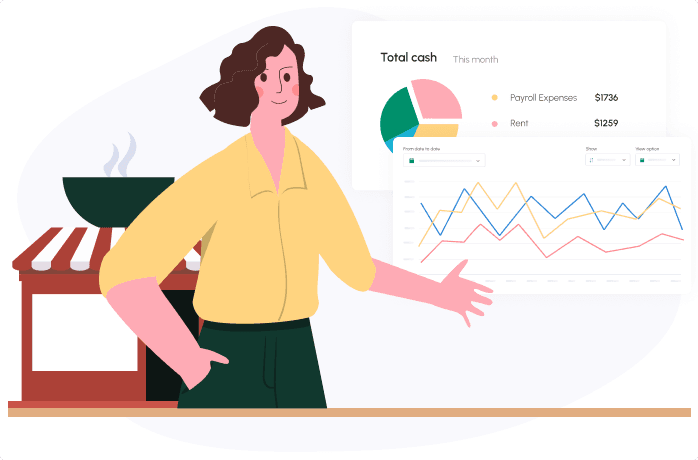
Imagine what goes on during an average week. The customers pay for food. Employees have to be paid. You will receive invoices along with food and beverage deliveries. Rent is on the way. Credit card deposits have their own specific timing. Sales tax is collected but it’s also an obligation.
Already the shopping spree for next week have begun.
If you only look at the amount of revenue or the final profit, then you will be missing a lot of this process.
The clue may be hidden in the cost of prime.
If the restaurant’s profitability starts to decline, the cost of food, beverages and labour costs must be taken into the equation.
Cost of selling goods with labor is the main cost. The Bookkeeping Chef’s guidance puts the cost of goods sold at 60% to 65% of revenue for many restaurants, focusing on weekly monitoring rather than waiting until the closing of the month.
Effective cost management for primes involves less focusing on a single percent and more noticing any early movements.
Imagine that the restaurant normally does well, but this week, there’s at a higher percent. Perhaps the overtime rate increased. The price of drinks may have remained the same while food costs rose. The chef may look over menus as well as waste, portions sizes or vendor invoices, as well as purchasing if the food percentage is greater.
The percentage raises a concern. It is in the underlying activities in restaurants.
Weekly reports allow this conversation to be held even though everyone is aware of the events that have occurred.
Two or three weeks later After that, the details become more difficult to reconstruct.
After the vendor bills are paid
The restaurant will be able to pay in the future for the ingredients it purchases. This can help explain how profit alone will not be enough to answer all cash related questions.
Vendor invoices must be received, recorded as well as tracked until they are paid. In a highly-competitive business with multiple suppliers, managing that manually can become an administrative burden.
Automating the process of paying bills can help organize this by reducing the repetitive handling of bills and payments. Systems for bookkeeping that are linked to accounting systems can provide owners with a clear view of their obligations, even if they have not yet been paid.
That’s useful because a bank balance viewed as an individual can appear more healthy than the restaurant’s real-time position.
Today, there may be $80,000 on the account. The $80,000 figure means very little if rent, vendors or payroll are to take the majority of the next few days.
That leads naturally to cash flow forecasting.
What will happen with our money after we’ve received the funds we’ve expected and have met our obligations?
The distinction can matter in deciding if this is a suitable week to repair equipment, make an addition purchase, or maintain cash.
A portion of the Cash Wasn’t Really Yours
Sales tax illustrates this especially well.
The money that a restaurant receives from its customers is eventually going to need to be managed in accordance to its tax obligations. If those dollars are mentally associated with operating cash, the balance of the bank can give a false idea of the amount there to be spent.
The consistent recording system allows restaurants comply with sales tax laws and also giving a clear overview of their financial standing.
It’s for this reason that restaurant accounting is more efficient in situations where financial responsibilities aren’t considered as distinct islands.
Prime cost affects margin. COGS (cost of products sold) and future payments are impacted by the purchases from vendors. Payroll is a factor that affects the amount of cash available and also the labor percentage. Sales tax impacts the availability of cash. P&Ls keep track of financial performance and forecasting allows management to see the future.
The pieces are joined.
Bookkeeping Chef assists in bringing these elements together, using restaurant-specific reports as well as system integrations. Bookkeeping outsourcing can be beneficial to owners who do not wish to be tasked with reconciling their financial information.
It’s the final part that’s important.
The idea isn’t for restaurant owners to simply stop looking at their accounts because someone else handles them. It is important that owners get information so they can understand what’s happening.
If the P&L indicates that the establishment is profitable however, the balance in the bank feels insufficient, don’t believe that the P&L must be incorrect.
What was the difference between them?
The answer to this question will give you more insight into the restaurant’s location than a number.