Monday begins with your security manager checking the risk register. By Wednesday, a developer has revised a cloud access policy. On Friday, someone uploads a revised security procedure, yet the Statement of Applicability still identifies the earlier version.
At first glance, none of these changes looks serious. An ISO 27001 audit can turn those ordinary inconsistencies into significant problems. Startups often struggle less with any single task than with keeping compliance work coordinated alongside daily operations.
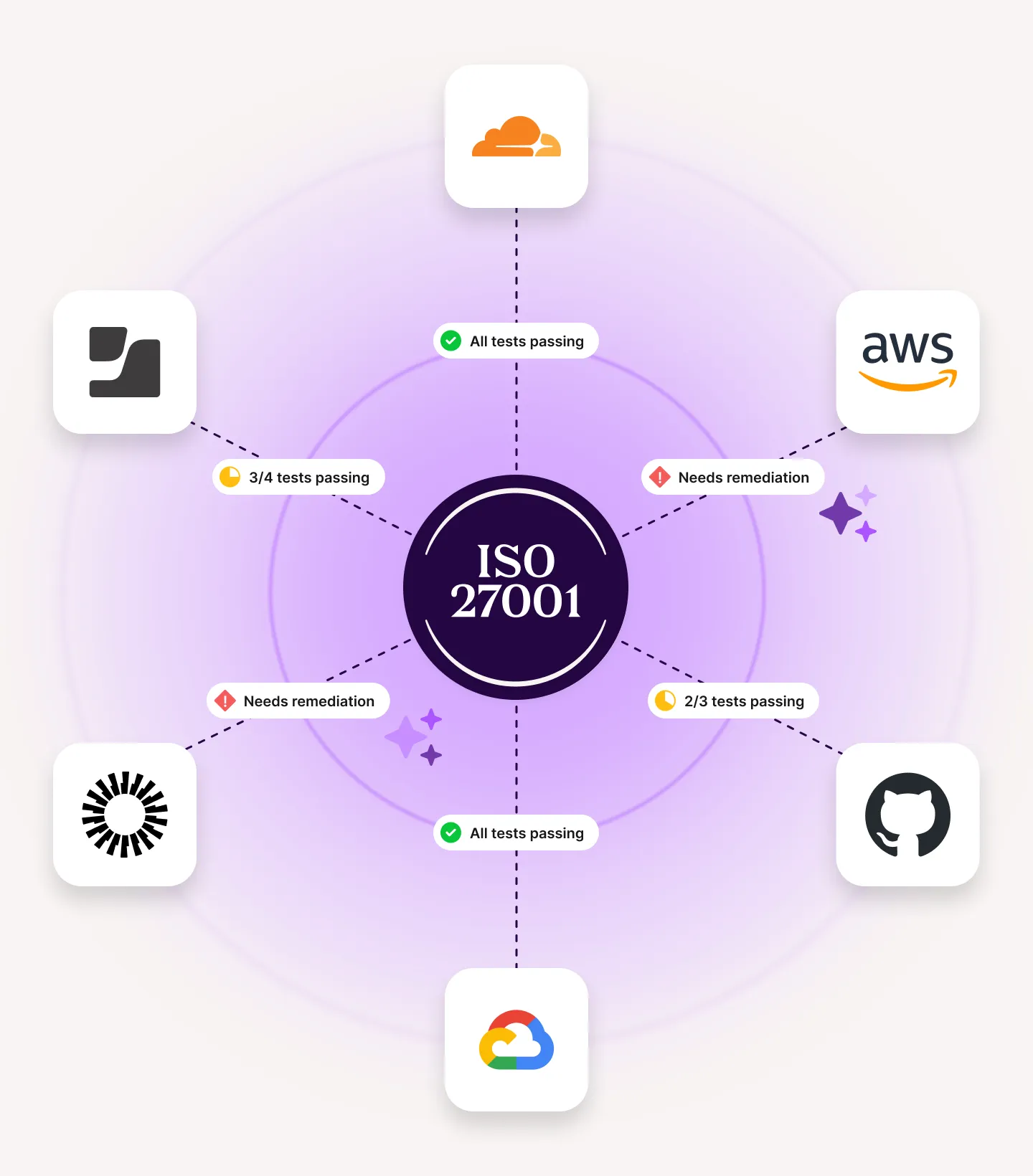
When Compliance Spreadsheets Become a Daily Chore
Spreadsheets are widely understood, inexpensive, and flexible. They are also easy to leave outdated or misplace. A small business may initially keep security risks, policies, and control assignments in separate files. Separate files may be manageable early on; difficulties develop as updates happen in different places.
A structured workspace in ISO 27001 compliance software can connect related compliance activities. Instead of searching through folders to understand a control’s status, team members can find its documentation and supporting evidence together.
Before You Subscribe, Identify Who Will Keep It Updated
A new subscription only helps if someone maintains it, so ask first: Who will be responsible for updates?
A startup with eight employees probably may not require the same compliance infrastructure as a multinational organization. Responsibility may be shared: founders review risks, developers manage technical controls, and operations staff coordinate records.
A useful ISO 27001 software platform clarifies task ownership without unnecessary complexity. If employees are reluctant to update a system, its features are unlikely to deliver much practical benefit.
The Statement of Applicability Needs Accurate Records
A Statement of Applicability should be treated as more than a formality. It should show the organization’s control choices, the reasoning behind them, and whether implementation has occurred.
Consider a business running its systems in the cloud: although the provider manages the facilities, the business still needs to consider applicable physical security concerns.
Clear documentation should explain what the organization remains responsible for. A connected risk register and Statement of Applicability can make those decisions simpler to trace during an audit.
What Happens When the Auditor Arrives?
During an assessment, an auditor might request documentation on access management, employee training, security policies, or risk treatment. Finding the latest approved documents becomes unnecessarily slow when records are spread across several systems. ISO 27001 certification software helps organize these materials, but it does not guarantee that the evidence is sufficient or that certification will be granted.
An accredited certification body independently evaluates whether the information security management system conforms to ISO 27001. Well-organized documentation can simplify the audit workflow.
A More Manageable Approach for Startups
When evaluating software, startups need to weigh cost, staff capacity, and the compliance work they genuinely need to manage. Businesses looking into the best compliance software for startups ISO 27001 certification may consider CertAssist for its straightforward approach. CertAssist brings together a risk register, a Statement of Applicability, editable policy guidance, evidence storage, ISO 27001 clauses, and Annex A controls.
Auditors can be given direct access, and the platform does not require integration with company infrastructure. Businesses that want to manage evidence directly may find that approach useful.
Make Security Documentation Sustainable
Preparing for certification should not take employees away from customers and product work. A manageable system supports up-to-date evidence, visibility into incomplete work, and preparation for an independent audit.
CertAssist is designed around that principle: giving smaller teams the structure needed to manage ISO 27001 without building an unnecessarily complicated compliance operation. The number of available features does not necessarily tell you whether a team will maintain it. The important question is whether the platform helps your team manage its security work as it grows.