Repetition is one of the most gruelling issues individuals face when working with artificial intelligence. A AI assistant could provide an outstanding answer in one instant and then forget important context in the following interaction. To keep the conversation going developers typically provide the identical project documents or files repeatedly.
As AI is integrated into everyday software, the effectiveness of this method will diminish. Intelligent systems should be able to store pertinent information quickly, retrieve it immediately and recognize the change in information over time. Memory is becoming an essential component of contemporary AI architecture.
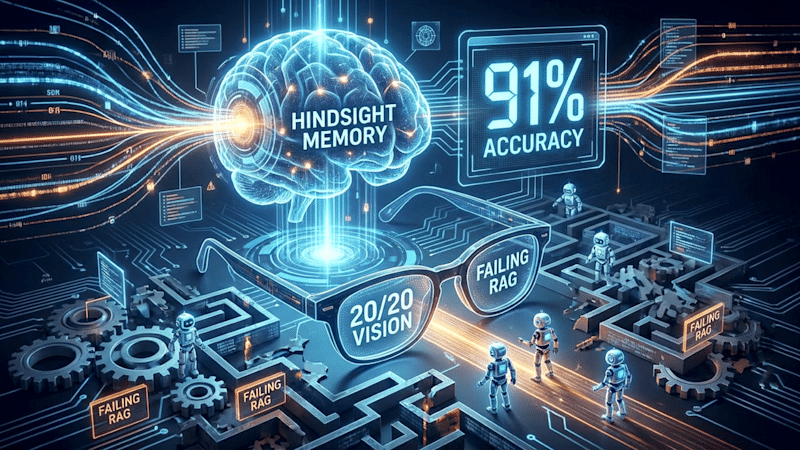
Memory transforms AI from reactive to intelligent
An AI system that remembers previous work will behave very differently in comparison to one that has to start with a fresh start every time. Persistent memory enables applications to analyze ongoing projects, identify regular patterns and offer answers based on past context rather than isolated questions.
Telys was developed to address this issue. Telys is an embedded AI memory engine and not a third party cloud service. Information is stored and then retrieved through the application. This design offers developers with a solid method to maintain context and reduce unnecessary computations. In the end, AI experiences are more natural, as the software keeps track of everything that is important.
Keep your data local to improve both speed and privacy
AI models are not judged solely on their ability to create text. For organizations that are deploying AI, the speed of retrieval, the system’s speed and security of data are becoming equally crucial.
Using on-device memory for AI agents allows applications to retrieve relevant information without depending on constant communication with external servers. Because memory is maintained in the local environment for AI agents, queries can be completed faster, and also allow organizations to keep better control over sensitive data. This is especially beneficial for engineers who are developing internal software, enterprise applications and privacy-sensitive software where the data’s ownership is not at risk.
Memory benefits developers because it works behind the scenes
The development of intelligent software shouldn’t involve managing a complicated infrastructure only to store the context. Software developers are increasingly looking for tools that integrate naturally into existing workflows, without the need for an additional overhead for operations.
Local MCP memory server makes that possible through allowing compatible AI development environments access to persistent memory directly in the local environment. AI assistants are no longer required to keep transferring data between remote APIs. Instead, they are able to access the information they require via the local memory layer. This streamlines development and decreases the amount of time needed for large teams that are working on projects with changeable codebases or documentation.
AI is only successful by being built in an ongoing context
Artificial intelligence is moving beyond basic conversations and towards long-running systems capable of planning, thinking and completing complicated tasks on its own. These systems require more than powerful language models they need reliable memory that can store knowledge over every interaction.
Telys is an advanced AI memory system that provides persistent local retrieval, specifically created for applications which require speed, stability in privacy, security, and speed. Telys incorporates on-device AI agent memory and a local memory server which is extremely efficient, allows developers to develop software that can keep track of the previous work done and retrieve information quickly. The system also gets better with time.
The ability to recall correctly can be as important as the ability to reason as AI becomes more integrated in products and business. Telys’ AI application development tool helps developers build AI applications with greater speed along with intelligence and efficiency at work by providing intelligent systems a permanent context rather than a temporary conversation.